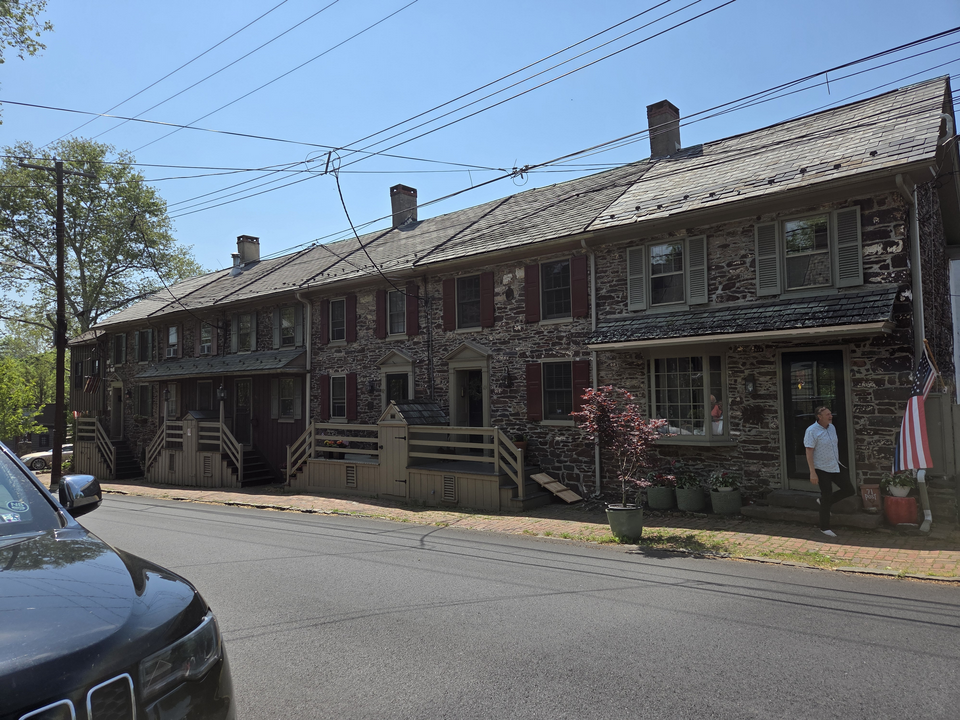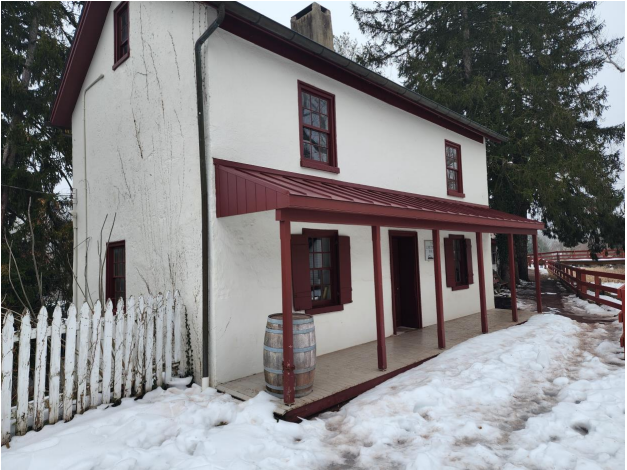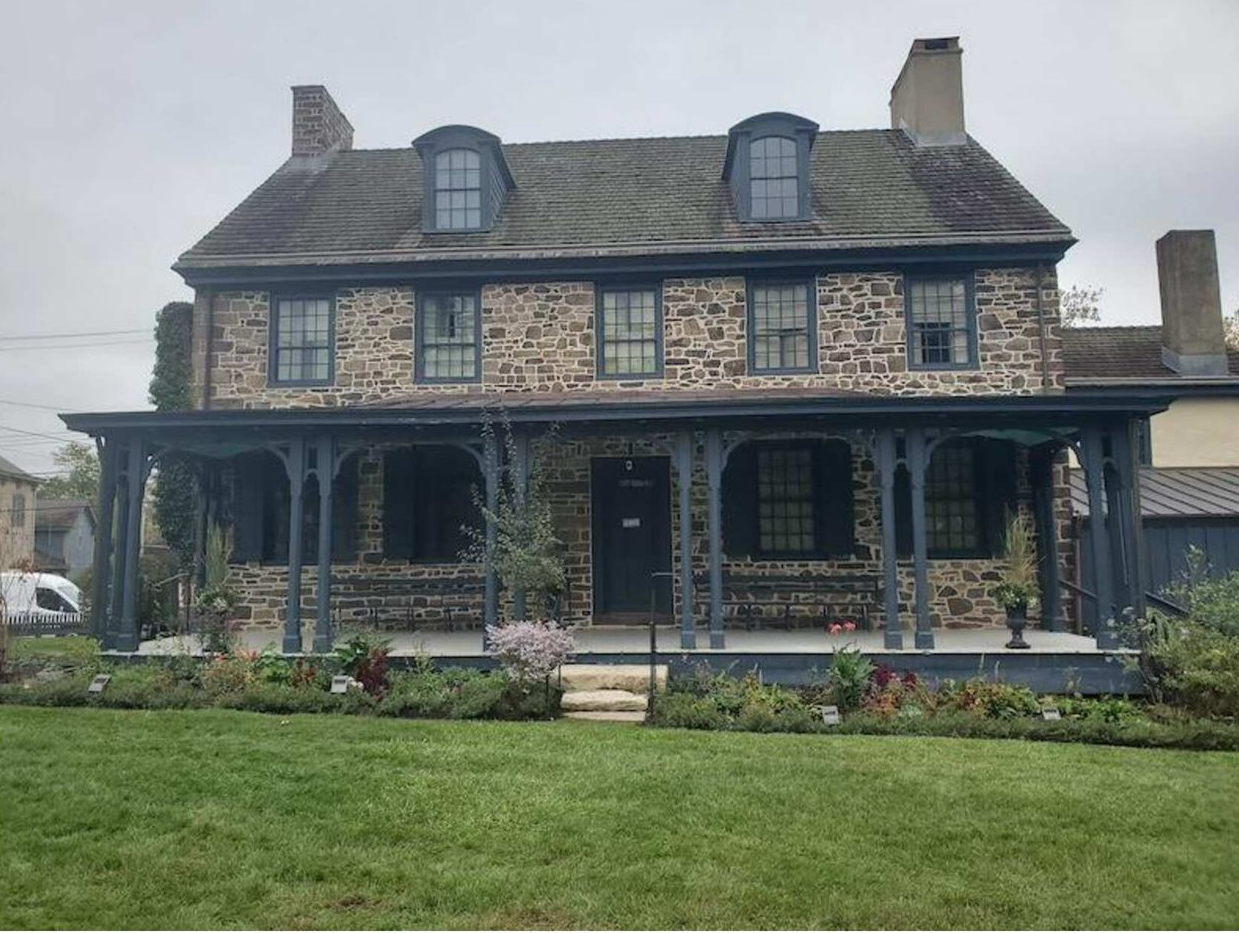
The Joseph Pickett House, 15-19 West Mechanic Street
Beyond the Door
2 August 2026
The Joseph Pickett House, 15-19 West Mechanic Street
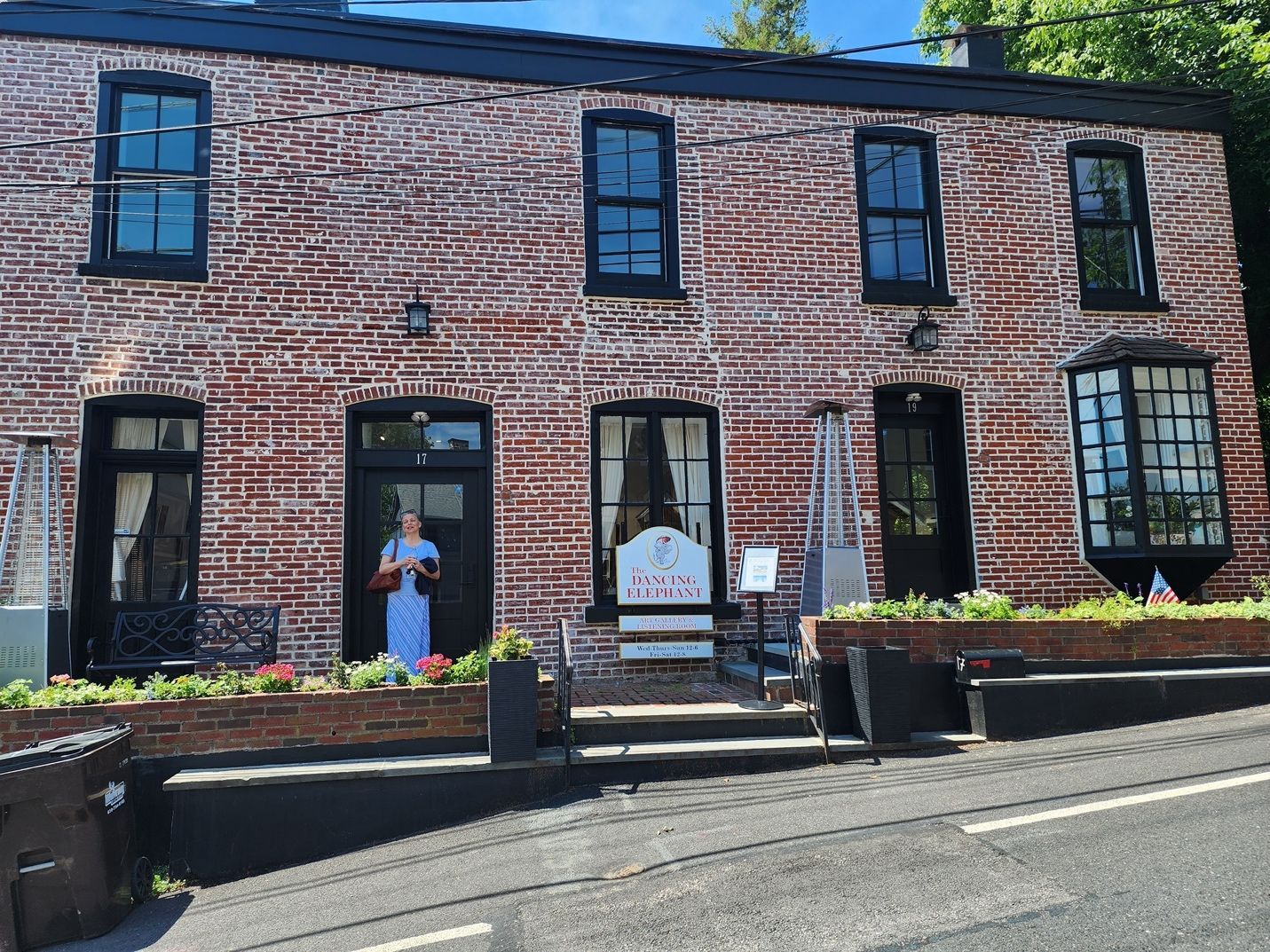
Heidi Breyer at streetside entrance, 15-19 West Mechanic Street
The building at 15-19 West Mechanic Street has had a role in New Hope history across nearly 200 years. This article will explore the story of this structure from construction to its current day renovation. The sources for this review include interviews with the current and former business owners at this location, the architects involved in the recent renovation, as well as the contents of the New Hope Historical Society (NHHS) archives, and the Bucks County Artists Database produced by the Michener Art Museum.
NHHS records state the land on which this structure stands was once part of the Joshua Van Sant plantation. Upon the death of Van Sant in 1823, the land passed to his daughter, Mary Van Sant Coryell. Following the c.1829 building erection the Delaware Canal was constructed immediately adjacent to it. Joshua Van Sant had specifically directed that his daughter, and not her husband, Lewis Slate Coryell, be his heir. However, upon Mary’s death in 1859, Lewis became the owner of this property regardless of his father-in-law’s last wishes.
Title records in the NHHS archives indicate that at several times during the 1800’s it was called a “store house” and was conveyed with an adjacent two dwelling building at 13 West Mechanic Street. It was sold at sheriff’s sale more than once during that time. By 1916 it seems to have been separated at sale from 13 West Mechanic and was called a “brick store.” That is consistent with 1977 NHHS records that state “In the 1890’s the late Joseph Pickett, now a renowned American primitive artist opened a general store in the building.”
The 1977 Bucks County Conservancy application describes it as a “multi-dwelling of plastered brick, located on the canal at West Mechanic Street.” Today this three-story building is the new location of the Dancing Elephant Art Gallery and Listening Room owned and operated by Heidi Breyer. It exhibits the artwork of oil painter, Alexander Volkov and from September to June hosts a monthly salon concert presenting a wide range of accomplished musicians. The building also has a top floor residence and lower level space under development. Heidi Breyer was interviewed and generously allowed NHHS volunteers access to her portions of the building on a recent visit. What was once presumably Joseph Pickett’s general store (and art studio) is now Heidi’s art gallery and flagship of Alexander Volkov’s art.
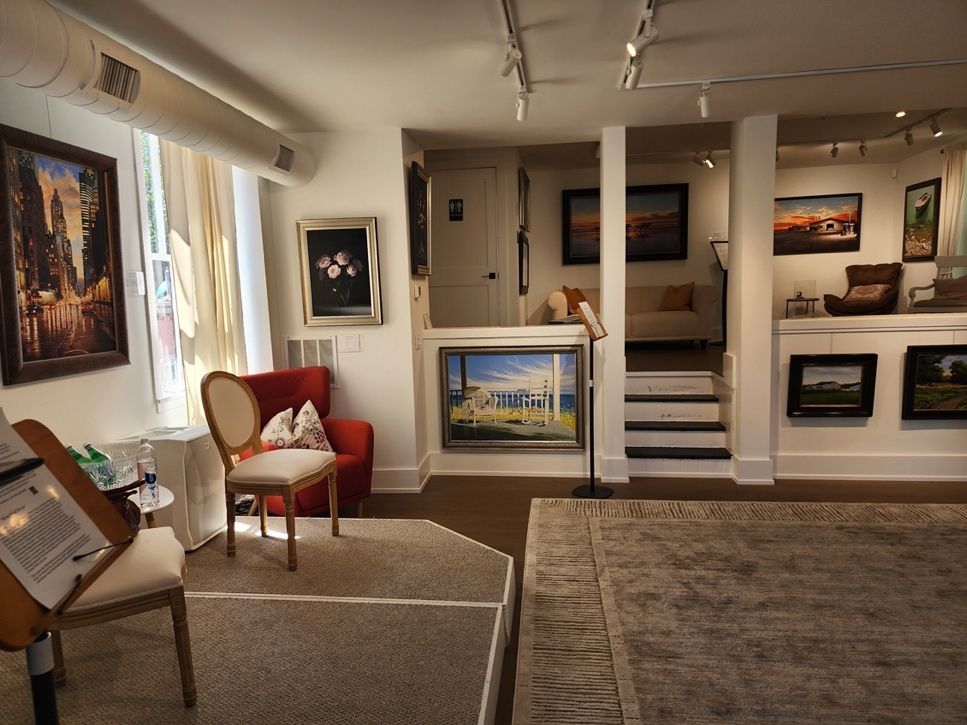
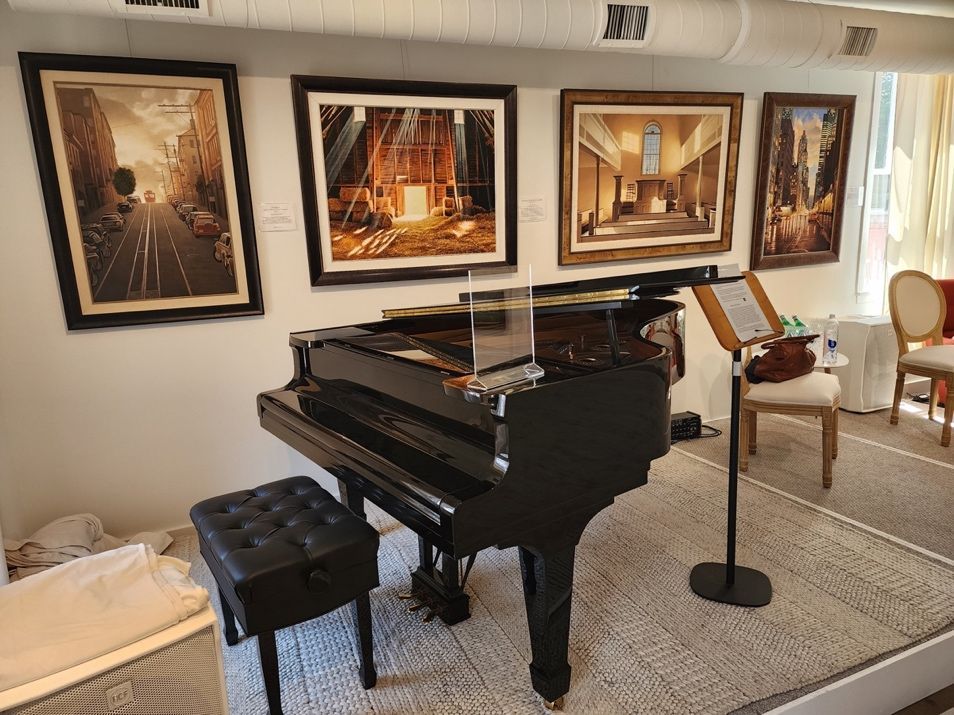
Interiors of the Dancing Elephant with art by Alexander Volkov and guest artist Linda Quinn, and piano for musical performances.
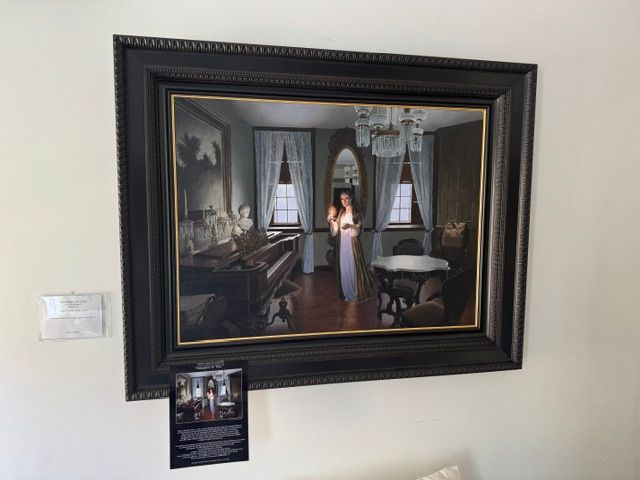
Volkov painting depicting an imagined Jane Paxson Parry in the Parry Mansion piano room.
Volkov will be creating more art at the NHHS Gala on August 31, 2026.
GET GALA TICKETS
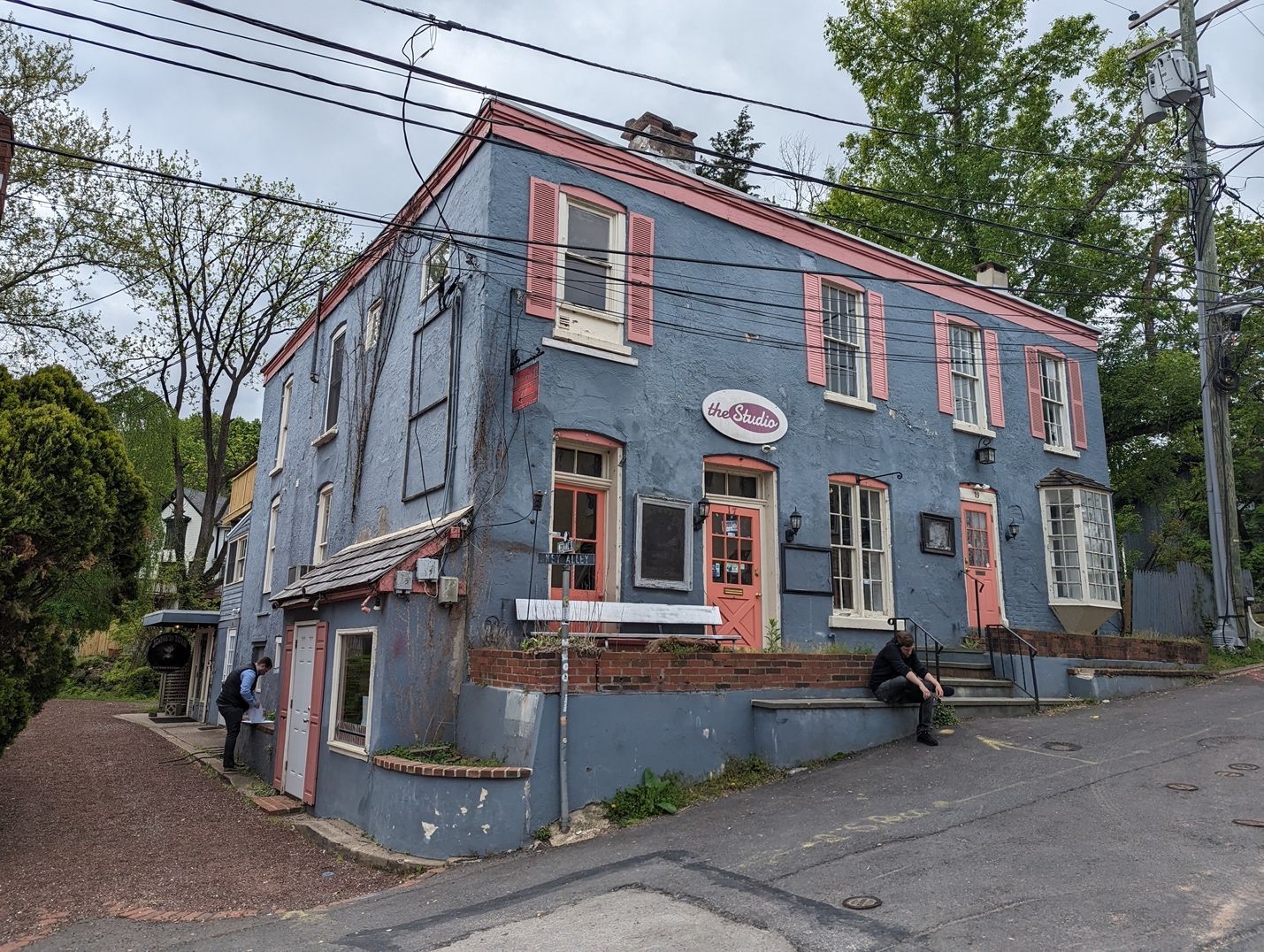
Subject structure prior to most recent renovation.
Architects involved in a recent re-envisioning of this building, Ralph Fey and Matt Young of Ralph C. Fey, AIA Architects, believe that when built the main entrance was on the lowest level. Once the Mechanic Street bridge was built over the canal the necessary rise in the street to accommodate the bridge led to the front doors being raised from the lowest level to the then 2nd floor, where street level entrances are still found today. The lower level has entrances from Ney Alley and the towpath. Some sources state that artist Pickett used an area in the “back of his store” to create his pieces. Fey believes it is possible that Pickett’s studio is the current raised area to the rear of the The Dancing Elephant business (seen in the photo above). A portion of Breyer’s area includes stairs to a top floor area with a bathroom and space for a bed. She intends this to be a place where invited musicians can rest when in town for concerts.
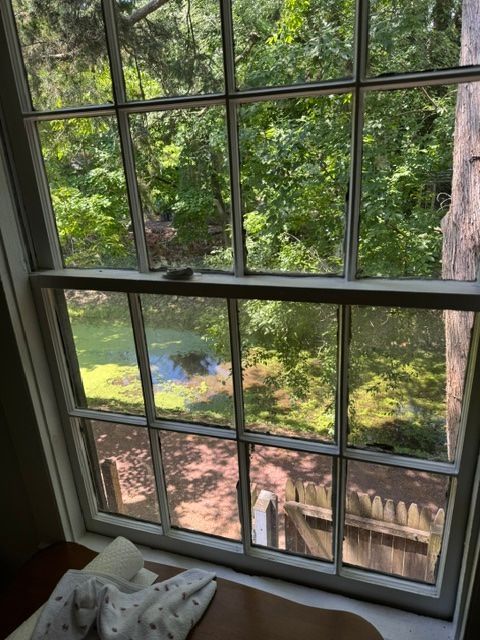
View of the Delaware Canal from inside building.
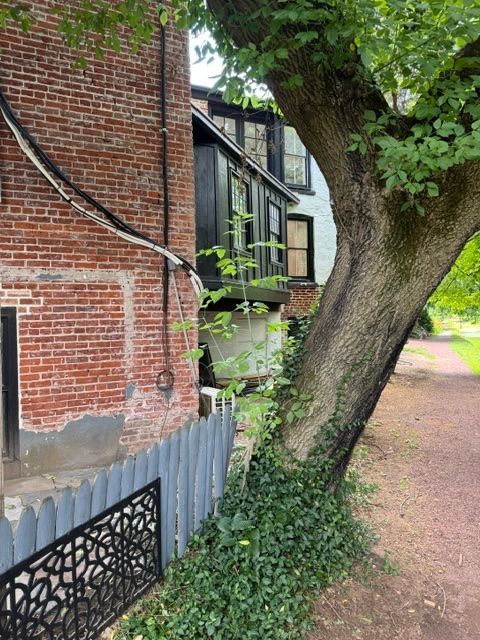
Rear of building along the canal Towpath.
Breyer pointed out that the street elevation side of the building once had three entrances (see pre-renovation photo above), one of those now functionally a window. Breyer also noted an apparent walled over window opening on an interior brick wall. Architect Fey believes what is now one structure may have been as many as three buildings at one point and perhaps the walled over interior opening was once a door. One of those multiple buildings might be the part of the building to the rear, with lower level entrances.
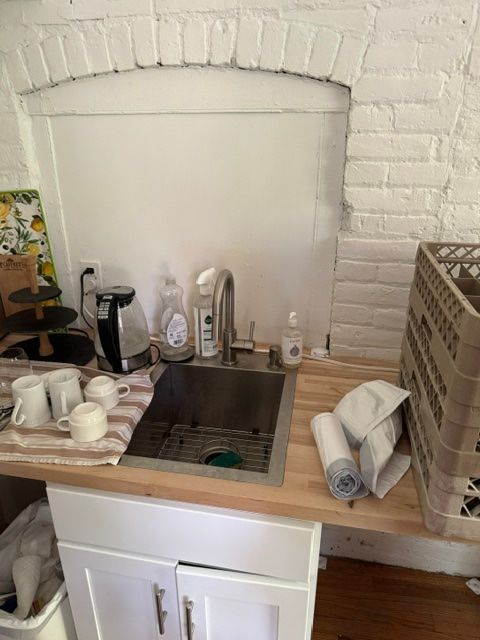
Interior wall showing one of several filled in doors or windows.
A tattoo parlor occupied that lower space for much of the last 20 years. Commercial and tourist maps in the NHHS archives indicate the presence of businesses such as Gourmet’s Bazaar and Foster’s Frame Shop (undated map, but zip code use indicates post-1963), the Chesire Cat (map about 1973, based on other businesses mentioned on the map), The Living Earth (1976 map), Vanity Fair (map undated), Toys in the Attic, The Book Gallery and Words and Music (1991 map). Other businesses found referenced in NHHS files include the Shoestring (1951) and Fueller’s Store (1979).
Of course, The Living Earth is an existing business in New Hope and that fact prompted an impromptu interview with owner Susan Fagnani. She stated her business was located in the Mechanic Street building from 1974-1978, prior to its move to Ferry Street and then to the current Bridge Street location. Susan recalled that while The Living Earth was on Mechanic Street (in Western end of structure), Tom Lynch’s Chesire Cat antique business was also present in another part of the building. There were also two upstairs apartments, and two apartments on the canal. Susan believes that prior to her business opening in the subject building, a dress shop occupied the space. She is also aware that multiple businesses filled the space after her 1978 business move to Ferry Street. Based on her personal experiences, she stated that the building “is probably haunted."
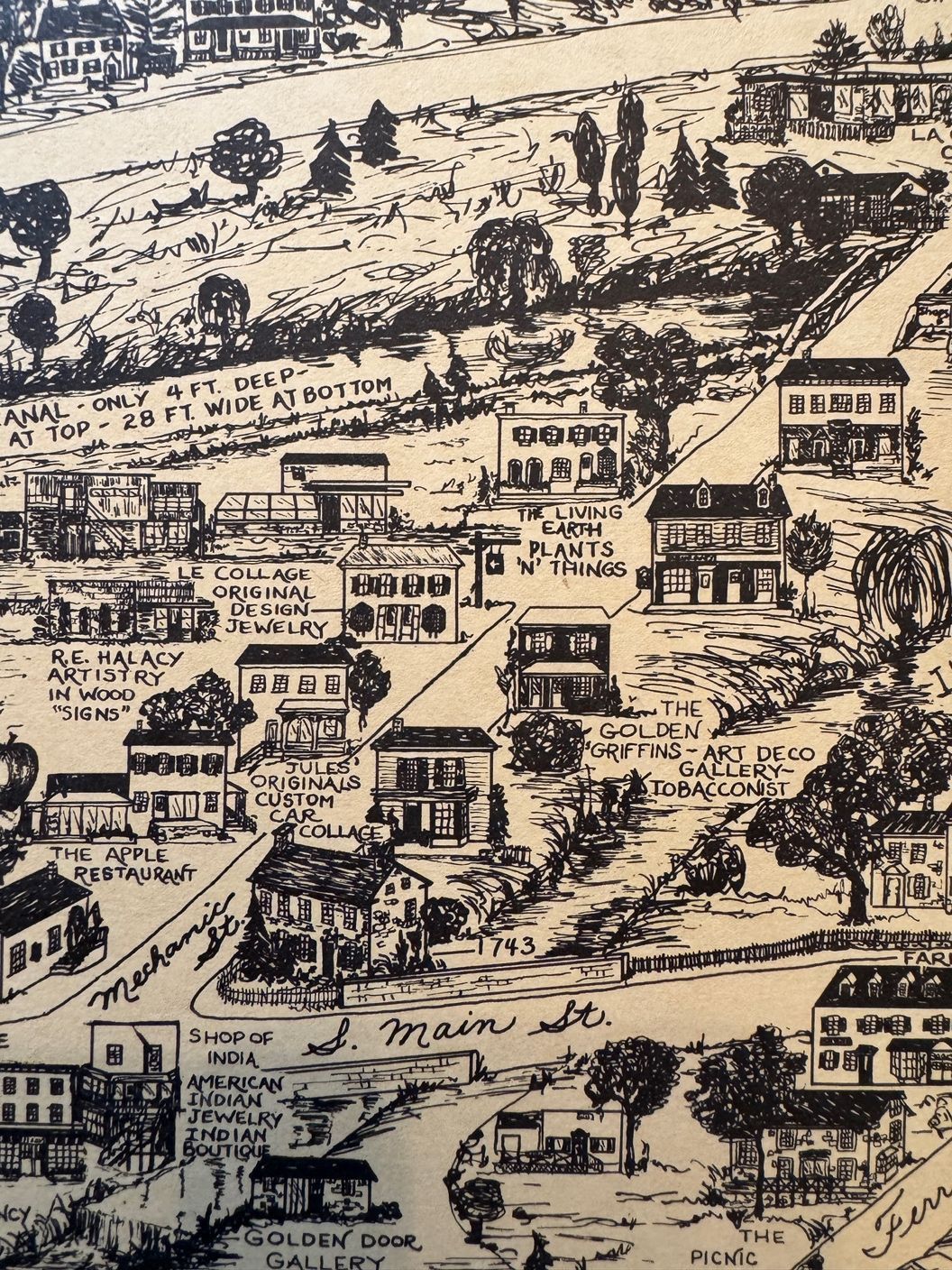
Detail of 1976 Pict-o-graph map showing The Living Earth on West Mechanic Street at the canal.
As mentioned above one of the most riveting parts of the history of this place is its connection to artist and businessman Joseph Pickett (1848-1918). It is believed his store was on the street level (the second level of this building), he lived on the top (third) level, and he painted his art at the rear of his store. His most famous paintings include “Manchester Valley.” That is a painting based on the view south across Aquetong Creek in New Hope, showing the early school house (now a synagogue), the train and tracks, and houses that still exist along Mechanic Street today. That painting now hangs in the Museum of Modern Art, one of a handful of surviving pieces of his art. It was called Manchester Valley because millworkers of the era were from Manchester in the UK and the area reminded them of home.
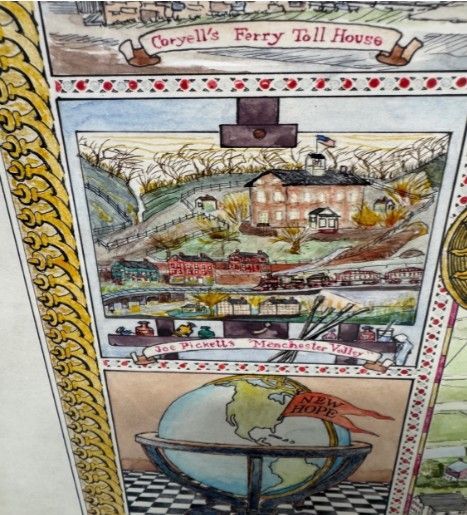
Detail of local artist Joseph Crilley’s 1976 depiction of Joseph Pickett’s painting,
“Manchester Valley”, found on a map of New Hope in the NHHS archives.
Pickett was a self-taught artist and was not well known during his life. As a way of advertising his art, he once painted his view of Manchester Valley on the side of his store. During the recent renovation care was taken in removing the old stucco to see if there might be evidence of that painting. However, architects Fey and Young report no evidence was found.
In the 1963 book, “Area Code 215” by Walter Teller, details are provided about how Pickett came to be well known. Picket was not “discovered” until 1925, when future building owner, painter and sculptor Lloyd (“Bill”) Ney, moved to New Hope and saw two of Pickett’s works hanging in the Worthington Brothers Garage and automobile showroom (now the Ferry Market) on Main Street. Soon thereafter he bought them for $15 total. Later, Ney, an artist himself and in need of cash for new frames, sold them to R. Moore Price for $50. In the 1930’s Newark Museum employees were on the road looking for art for a show. By then, after some local sleuthing, they located two of Pickett’s three then remaining pieces. Those two were “Coryell’s Ferry, Washington Taking Views” (now in the Whitney Museum), and “Washington Under the Council Tree” (now in the Newark Museum). The third was “Manchester Valley” then hung in the New Hope public school on Bridge Street. Teller, in his book, mentions interviewing Asa Pickett, Joesph’s grand-nephew, who stated “I don’t know how many little paintings he did, dozens of them, about the size of a nine by twelve…..But I guess his widow, that was my “Aunt Emmy”, burned them You can’t blame her- they were just lying around and nobody wanted them.” Asa also is quoted saying Joseph “was a canalboat builder by trade, a good carpenter, and most of the time he worked at the boat yard where the Legion hall is now, but he was always dickering about something and always trying something new. At one time he lived over on Bridge Street.” Joseph Pickett and his wife are buried at Beechwood Cemetery in nearby Hulmeville, PA. His wife also died prior to her husband reaching fame.
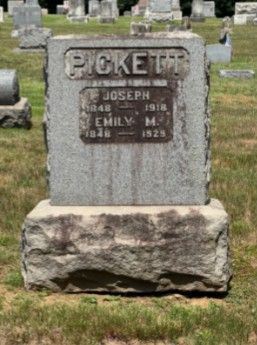
Gravestone of Joseph and Emily Pickett today, Hulmeville, PA
In 1963 this story takes an interesting turn. Joseph Pickett’s building on Mechanic Street was bought by Lloyd Ney (1893-1965) and his wife, Jean. Ney an initial “discoverer” of Pickett owned the building where Pickett created the art. Lloyd Ney trained professionally at the Pennsylvania Academy of Fine Arts and subsequently settled in New Hope in 1925 after a period in Paris. He soon became a key member of the progressive, modernist art scene in what was called “The Latin Quarter” around Mechanic Street and the Towpath. Ney is listed in the Michener Art Museum’s database of Bucks artists:
Lloyd (Bill) Ney | Bucks County Artists Database
That database states “He became famous for being dramatically turned down from the annual Phillips' Mill exhibition held in New Hope in 1930 and holding a rival, modern exhibition the day before the Phillips' Mill opening. Ironically, in 1960, one of Ney’s own paintings won the Phillips' Mill Exhibition.”
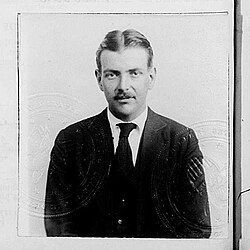
Passport photo of Lloyd Ney, 1929
Of course, his name is also memorialized in the name of Ney Alley, where he also lived near the Joseph Pickett House featured here.
Many thanks to Heidi Breyer, Susan Fagnani, Ralph Fey and Matt Young for sharing this building and their knowledge with us, as well as NHHS volunteers Tom Lyon and David Newhart for their roles in creating this article.
If you own or reside in a historic property in New Hope and would be interested in having it featured in our “Beyond the Door” series, please contact us at
Director@Newhopehistorical.org. A year’s free historical society membership is now offered to those who allow us to feature their property.
Beyond The Door