Planing Mill Became Unique Art Studio, and Is Now to Become a Museum
Beyond the Door
14 September 2026
Planing Mill Became Unique Art Studio, and Is Now to Become a Museum
56 Buttonwood Street
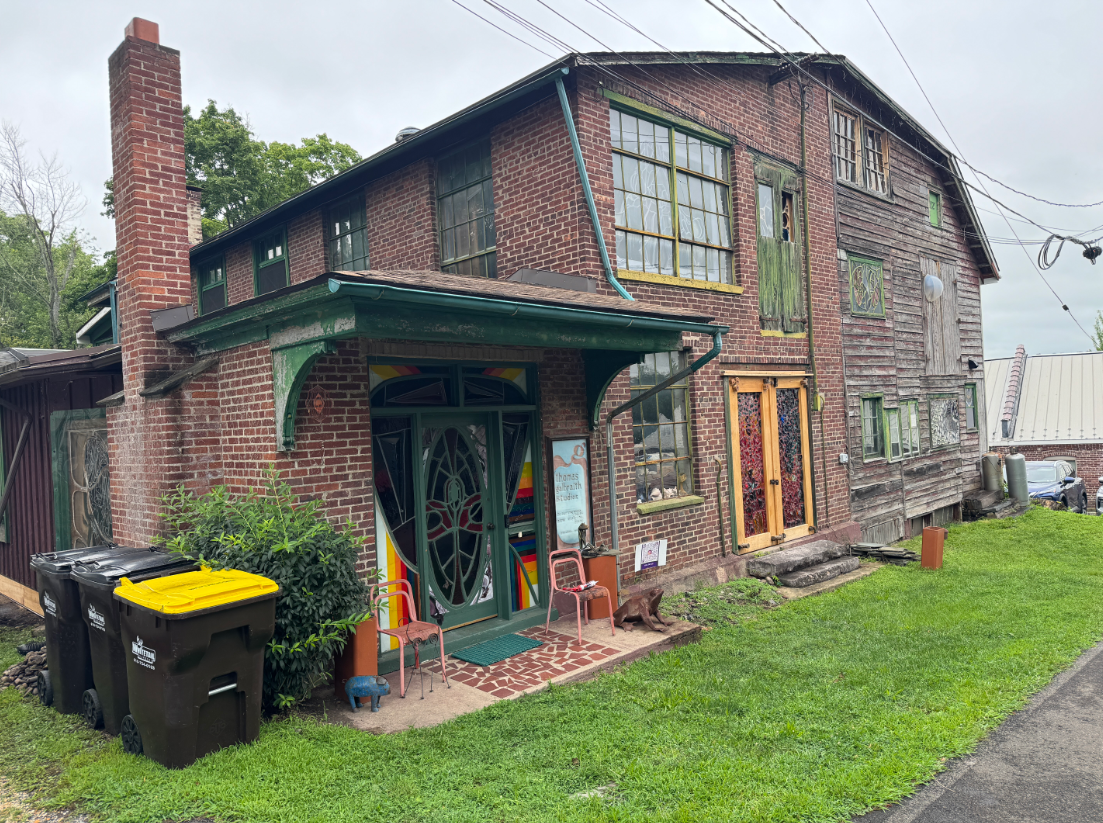
56 Buttonwood Street
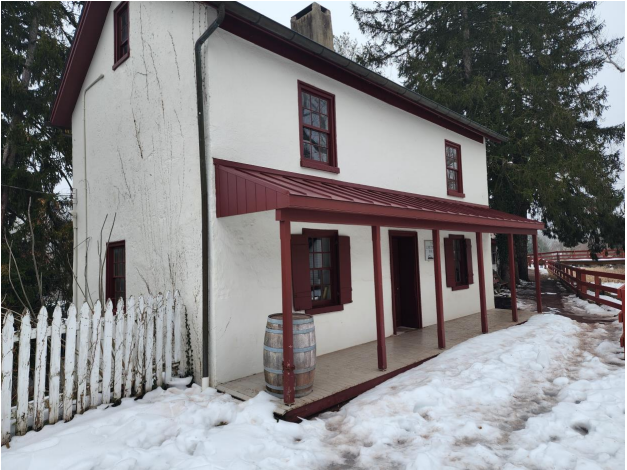
On land once part of the expansive Paxson estate, a collection of buildings at the northeastern end of Buttonwood Street provides a look back into a time when industry thrived in New Hope, artists were later attracted to its New Hope’s avant garde atmosphere, and when folks living in New Hope knew virtually every other resident of the borough.
The Paxson estate once reached from the current location of the New Hope Solebury High School to the Delaware River. An article in the 1979 New Hope Gazette, volumes of which are found in the New Hope Historical (NHHS) archives awaiting digitization, states that in the late 1800’s Roy Large’s grandfather built a planing mill at 56 Buttonwood Street. A simple Google search tells us that planing mills are woodworking facilities that take rough-sawn lumber and create smooth uniform dimensional lumber, flooring, or decorative trim. Other NHHS archival records show sales of this part of the Paxson estate to a Large family member in 1919. After passing through several generations in the Large family, NHHS archives have the mill passing to Ronald and Arlene DuBree in 1971, and then to artist Cynthia Wuthrich, physicist/artist/carpenter Thomas Galbraith, and Cynthia’s aunt Bernice Casper in 1976. Cynthia’s aunt Bernice lived in the home next door at 64 Buttonwood Street.
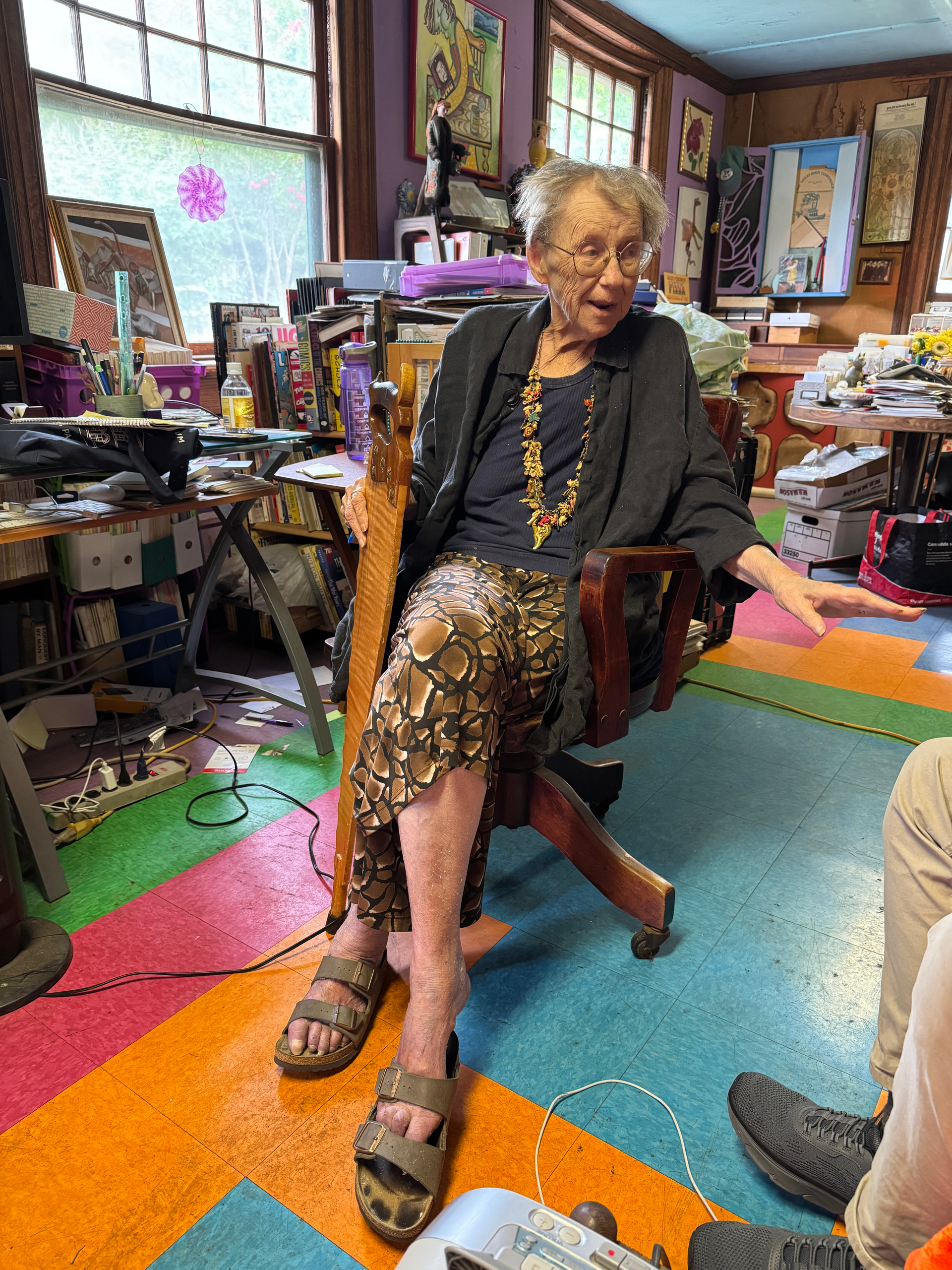
Cindy Wuthrich in the office area of the studio, during recent visit.
The 1979 Gazette article goes on to say that the new owners envisaged the 28,000 square foot building as a multimedia studio. Galbraith had studios and shops there for millwork, stained glass, ceramic tiles, lapidary, painting and sculpture, while Wuthrich had a studio for jewelry and lapidary. Multiple other artists enjoyed access to these facilities as well, as mentioned in a 2024 Bucks County Herald article by NHHS board member, Bridget Wingert. These artists included Alan Rockwell, Pete Waxler, John Abbott, Phil Powell, James Martin, Rhonda Martin, Robert and Dee Rosenwald, Jack Rosen, Ray Halacy, Merle Citron, Dorothy Grider, Raymond Barger, Bill Ney, Pat Martin, and Jim Darrah.
On a recent visit to 56 Buttonwood Street, NHHS operations director, Vickie Lupisella, and two NHHS archives volunteers met with Cynthia (Cindy) Wuthrich, who generously allowed us to interview her. She is not certain when the mill building was built. However, she recalls that when she arrived there crafted molding was found running the full length of the building, approximately 22 feet. Cindy’s partner, Tom Galbraith, and her aunt, Bernice Casper, have passed away, but Cindy is actively engaged in plans to convert the studio into a museum under the auspices of the Stoney Hill Foundation. She explained that Tom, a professional physicist, with a deep interest in art, often made improvements to what became both a studio and a home. She continues to live upstairs from the studio and noted that there are stained glass walls in the bathroom, among other artistic features.
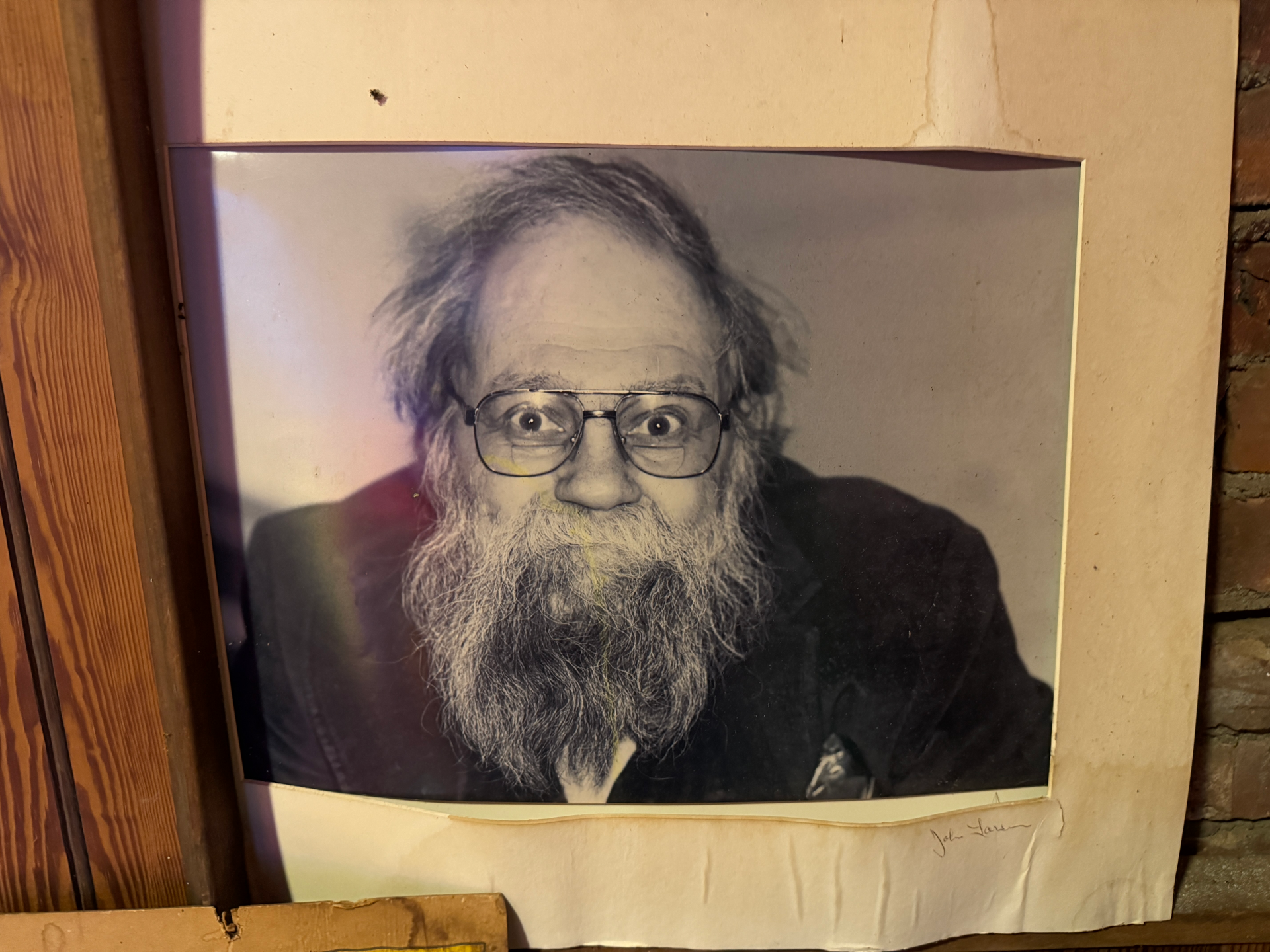
Photograph of Tom Galbraith, by John Larsen, from Cindy’s collection.
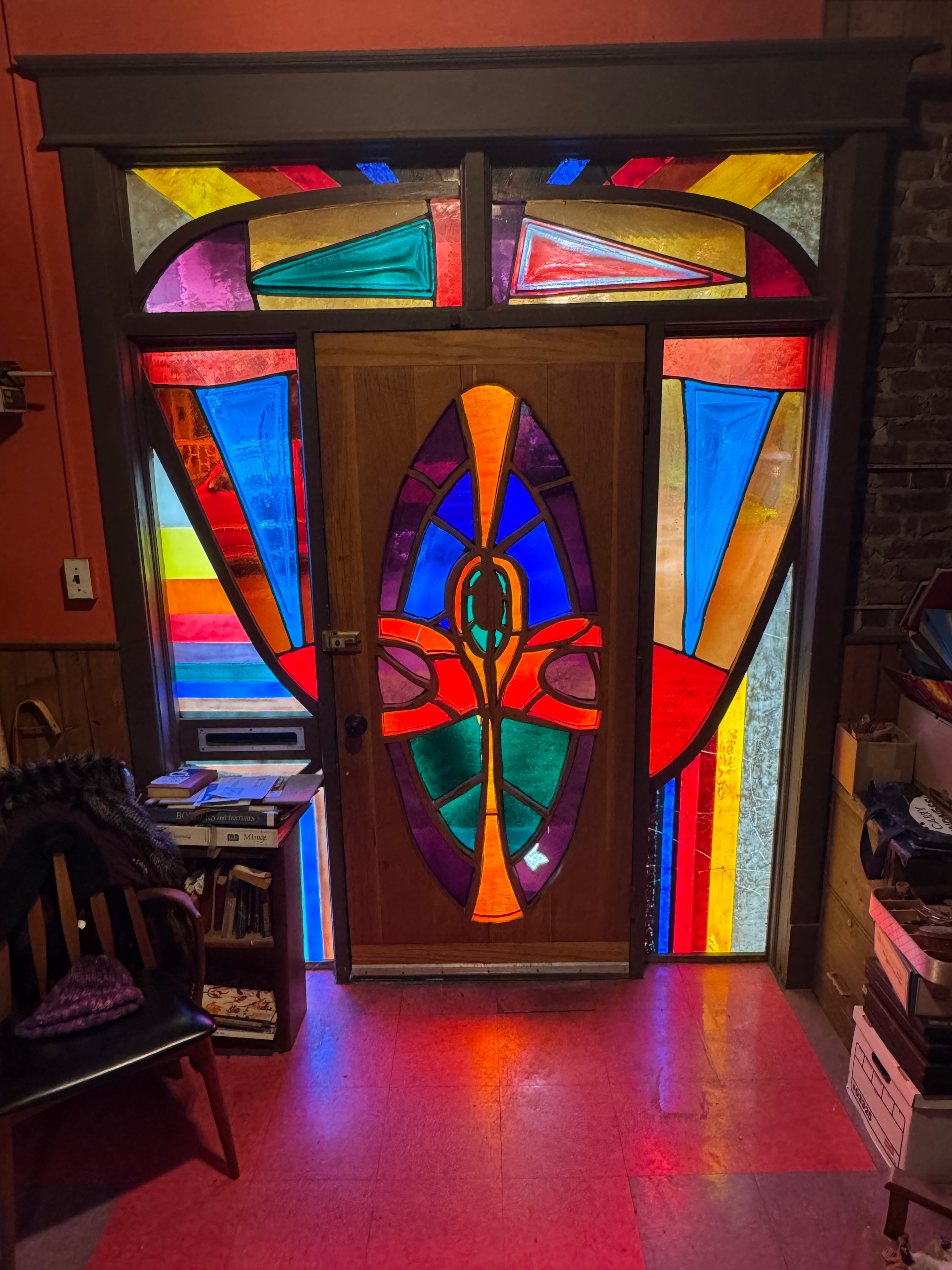
Studio entrance foyer
The website for the Stoney Hill Foundation states the following:
“The Stoney Hill Foundation exists because Jim Woolsey, Tom Galbraith & Cynthia Wuthrich had a dream. They wanted to preserve a small part of the area that they knew and loved. When Jim died in 2014 his estate created the foundation. He wanted others to be able to see the works of local artists, artisans, musicians and authors in a building that had gone through many changes over the years of its existence. Originally Large’s Mill, a wood planing mill where doors, molding and windows were made for many of the buildings in New Hope. The building became the home and studio of Tom and Cynthia in the 1970’s. The building also became a repository of works by the many people Jim, Tom and Cynthia respected and collected over the years.
In the 1960’s Jim saved Bill Ney’s depiction of the barge ride from being tossed in the trash. Tom Galbraith spent a year restoring the painting. The mural now hangs in the community room of New Hope Boro Hall on permanent loan from the foundation so the city of New Hope can enjoy it. Ney’s painting of New Hope boro is also on loan and hangs in a meeting room. This painting of the boro was also loaned to the Michner art Museum for the Ney Retrospective.
For almost 50 years the three friends shared many experiences. Just think: It all started when they lived together on Old York Road in New Hope.”
During our visit with Cindy she stated she is working on getting the building and its collection ready for public access which is likely to be by appointment. In addition to the art, and other various objects, Cindy has been an avid collector of historical items, with one focus being on the artistic history of New Hope and the area. She stated that she comes from “a family of collectors.” She mentioned she is also writing a book that will, at least in part, explore her experiential memoir of the history of the area, as well as draw on her collection of historical memorabilia. She specifically mentioned that when she moved to New Hope in the mid-1970’s it was a time when most residents knew every other resident of the borough.
Many thanks to Cynthia Wuthrich for allowing us to visit her and her studio, as well as Vickie Lupisella and NHHS volunteers Tom Lyon and David Newhart for their roles in creating this article.
If you own or reside in a historic property in New Hope and would be interested in having it featured in our “Beyond the Door” series, please contact us at Director@Newhopehistorical.org. A year’s free historical society membership is now offered to those who allow us to feature their property.
Beyond The Door